From Maternity Roosts to Winter Hideaways: The Secret Seasons of Teesside's Pipistrelles
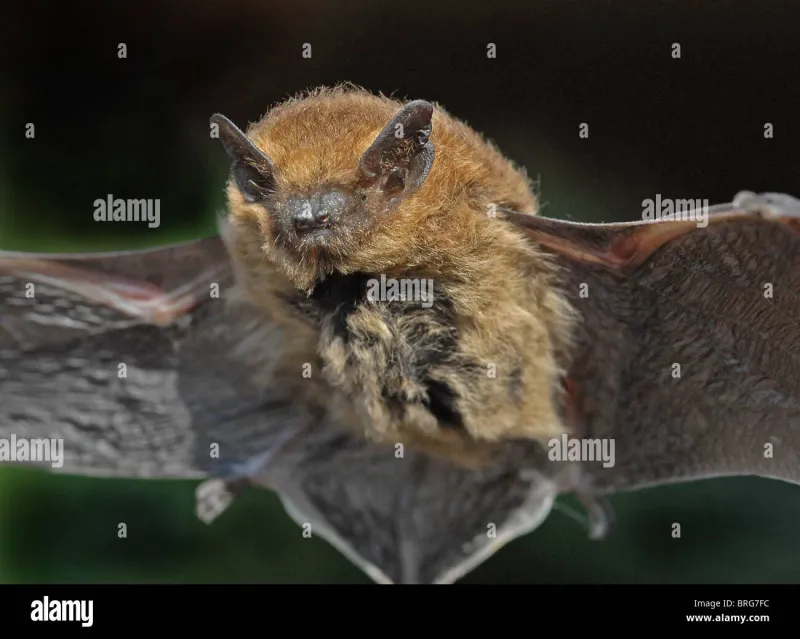
Photo: pipistrelle bat flying at dusk UK garden, via c8.alamy.com
If you've ever sat in your garden on a warm June evening and watched a small, jerky shape flit between the fence panels and the washing line, chances are you've met a pipistrelle. At barely four grams — lighter than a two-pence piece — these are the UK's smallest and most familiar bats, and here on Teesside they're very much our neighbours.
But what most people don't realise is just how much happens across the year. The pipistrelle you spot in July is living a completely different life by January. Let's take a stroll through their calendar.
Spring: Waking Up and Moving In
Pipistrelles spend the winter in a deep torpor, tucked into crevices where the temperature stays stable — behind loose roof tiles, in old wall cavities, or in tree bark splits. Around April, as insect numbers start to climb, they emerge and begin feeding in earnest.
Spring is also when females seek out maternity roosts. These aren't romantic caves; on Teesside they're just as likely to be under a soffit board in a Billingham semi or behind a fascia in a Guisborough terraced house. A single roost can hold dozens of females, all clustered together for warmth. Crucially, males are mostly booted out — the nurseries are mums-only affairs.
Our volunteer survey teams often record their first steady bat activity of the year along hedgerows and canal corridors in mid-to-late April, once evening temperatures hold above about 10°C.
Summer: The Night Shift in Full Swing
By June and July, the females have given birth — usually to a single pup, occasionally twins. For the first few weeks, the pups cling to their mothers, then graduate to a 'crèche' within the roost while the mums hunt. A lactating pipistrelle can munch through around 3,000 midges and mosquitoes in a single night. If you've ever wondered why your garden barbecue feels less plagued in some years, thank a bat.
Here's the thing that surprises newcomers: Teesside's industrial heritage is actually brilliant for bats. The River Tees and its old industrial margins — the Tees Barrage area, Portrack Marsh, the backwaters around Stockton — offer exactly what pipistrelles love: sheltered, insect-rich water edges, warm brick and steel structures that hold heat, and dark corridors free from bright floodlighting. Brownfield sites, often written off as wasteland, can be insect supermarkets.
Our summer surveys regularly pick up two distinct species: the common pipistrelle, which echolocates loudest at around 45 kHz, and the soprano pipistrelle, peaking near 55 kHz. They look almost identical to the eye, but on a bat detector the difference is unmistakable — one sounds like a wet slap, the other more like a raspy hiss.
Autumn: Mating Season and the Great Feeding-Up
September and October are party time. Mating season sees males setting up small territories, singing — in ultrasonic, of course — and performing slow, fluttering display flights to attract females. Meanwhile, every bat in Cleveland is feeding frantically, building fat reserves for winter. Dusk walks along the Tees in early autumn can be the best bat-watching of the whole year, with activity peaking soon after sunset.
Winter: Gone Quiet
Once cold nights thin out the insect supply, usually by November, pipistrelles retreat into hibernation sites. They don't travel far — often just a few hundred metres from their summer haunts. Roof spaces, old mill walls, and tree hollows across the area all shelter hibernating bats. Disturbing a hibernating bat can be fatal, as waking burns through precious fat reserves, which is why our winter surveys are done carefully and under licence.
Spotting Them From Your Own Back Garden
You don't need special kit to get started:
- Timing: Head out 20–30 minutes after sunset, roughly May to September.
- Location: Stand near water, a hedgerow, or a garden pond — pipistrelles hunt along 'edge' features.
- Look for the flight: Fast, erratic, banking sharply around obstacles. Pipistrelles fly low and tight, unlike the leisurely swoop of a brown long-eared bat.
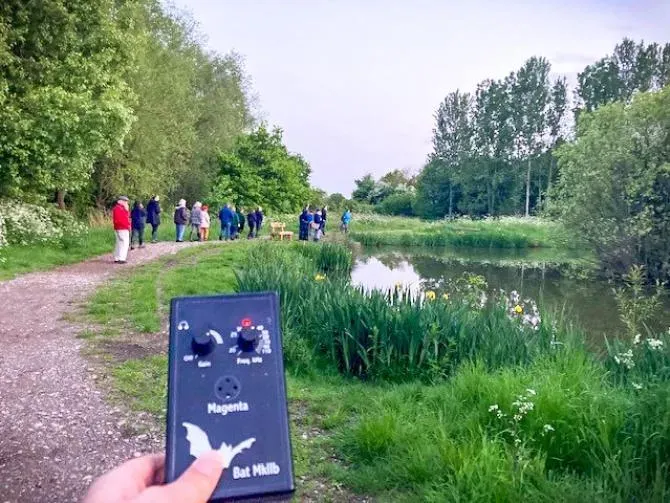
- Listen: A basic heterodyne bat detector (from around £25) will let you hear their echolocation calls and even distinguish common from soprano by frequency.
If you'd like to go further, Cleveland Bats runs training sessions and volunteer surveys throughout the year — no experience needed, just patience and warm layers. There's something genuinely magical about hearing your first pipistrelle ping across the Tees at dusk. Come and join us.