Autumn's Secret Party: Chasing the Swarming Season in the Cleveland Hills
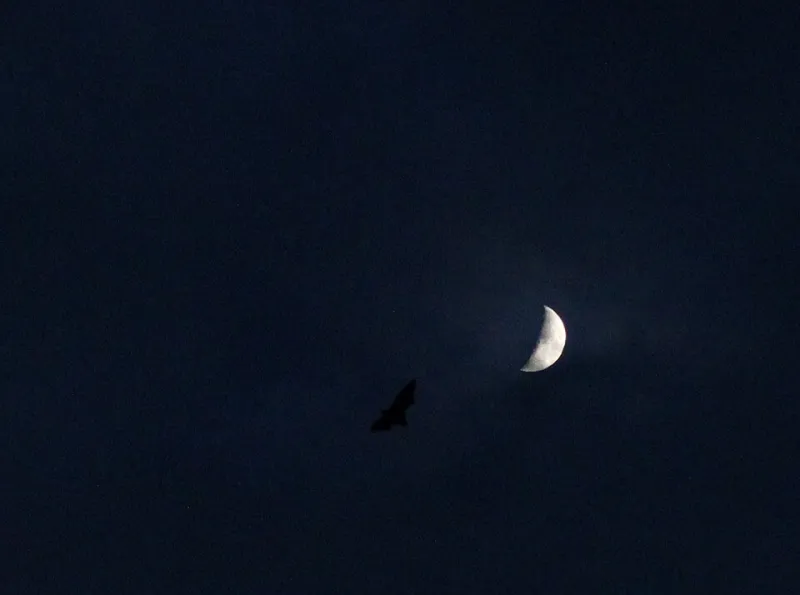
Photo: Phadke09, CC BY-SA 4.0, via Wikimedia Commons
There's a moment every September when our inbox fills with the same slightly sheepish message: 'I've packed the bat detector away — see you in spring.' We understand the instinct. The swifts have gone, the evenings are drawing in, and it feels like the natural world is buttoning up its coat.
But here's the thing. If you put that detector away now, you're leaving before the main event.
What Is Swarming, Anyway?
Through summer, bats are creatures of habit. They roost in one place, feed over familiar hedgerows and ponds, and stick to a fairly tight routine. Come late August and September, all that changes.
Bats from across a wide area — sometimes twenty kilometres or more — start converging on the entrances of caves, mines and other underground sites. They don't go in to roost, not really. They fly in and out, circuit the entrance, chase each other through the dark, and generally carry on like it's the last night of the summer holidays.
And in a sense, it is. This is swarming: the great autumn social season. It's where bats mate, where young of the year learn the location of hibernation sites from their elders, and where populations that never otherwise meet get thoroughly mixed. Think of it less as a roost and more as a village hall disco held at the mouth of a cold, dark hole in the ground.
Why Cleveland Is Proper Swarming Country
We're lucky here. The Cleveland Hills are stitched with the geological seams and industrial scars that bats adore — old alum workings, disused mine adits, limestone crevices and the kind of damp, dark cavities that most people walk straight past.
Along the coast, the sea-worn caves and undercliff fissures between Saltburn and Skinningrove offer their own version of the same thing: stable, cool entrances that stay frost-free through winter. Any of these could be hosting swarming nights right now, and many are sites we simply don't have records for.
That's the frustrating bit. Swarming sites are among the least recorded features of the UK bat landscape, precisely because they look like nothing at all. A hole in a hillside doesn't photograph well. It doesn't show up on a planning application. But get a detector pointed at the right entrance on the right September evening and you might log more species in two hours than a whole summer of garden surveys.
What You Might Hear
The beauty of swarming is the mix. On a good night at a proper swarm site, a single detector can pick up:
- Soprano pipistrelles, still common but no less welcome
- Natterer's bats, with that lovely slow, rhythmic sweep
- Whiskered and Brandt's, trickier to separate but unmistakably present
- Brown long-eared bats, whose quiet, fluttery calls are easy to miss
- And if you're really lucky, a Myotis species working the entrance so fast you can barely follow it
The other tell-tale is behaviour. Summer bats fly purposeful, feeding circuits. Swarming bats are all over the place — sudden chases, rapid entries, brief landings at the entrance and back out again. Once you've seen it, you'll never mistake it for anything else.
Join a Count, Add to the Map
This is where you come in. Swarming counts are one of the most valuable things a volunteer can contribute to, because the data feeds straight into national monitoring. A site confirmed as a swarming hotspot gains a level of protection in the planning system that a quiet, unrecorded hole in a hillside simply doesn't have.
We run guided swarming watches through September at sites across the area — some in the Hills, some along the coast — using full-spectrum detectors and, where we're licensed, harp traps for a closer look. No experience needed. Warm coat, sturdy boots and a thermos will get you further than expertise.
If you'd rather go it alone, note the location, the date, the weather and what you heard, and send us the record. Every entry helps us build a picture of where Cleveland's bats plan to spend the winter — and who their neighbours at the party were.
So dig the detector back out of the cupboard. September's the best month of the year, and most people are already asleep.