Barns Full of Wings: Meeting the Teesside Farmer Who Chose Bats Over Steel Cladding
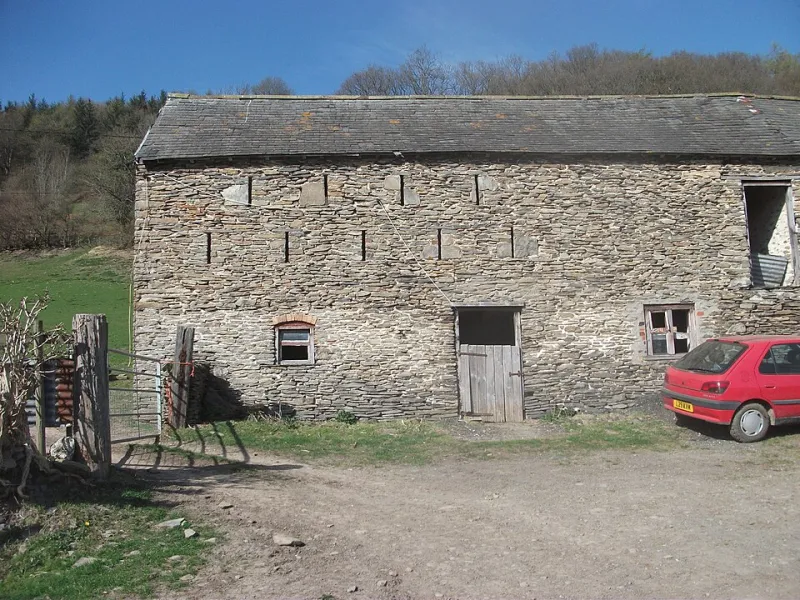
Photo: John Haynes , CC BY-SA 2.0, via Wikimedia Commons
The barn smells of hay and old stone, and somewhere above the straw bales — though you'd never guess it — there are bats. Not one or two roosting quietly in a corner, but a maternity colony of brown long-eared bats that has returned to this Teesside farm every summer for as long as anyone can remember.
The farmer, who'd rather we called him Tom than name the holding precisely (bats and publicity have a complicated relationship, thanks to the law), farms beef and sheep on the urban fringe of Cleveland. His buildings date from the 1870s: thick stone walls, slate roofs, dark rafters and gaps where the mortar has long since crumbled away. To a developer, that's a liability. To a bat, it's a five-star hotel.
"People assume we're sitting on a problem," Tom says, leaning on a gate while his ewes watch us suspiciously. "But I've never once lost money to a bat. I've lost plenty to weather, to prices, to a broken baler. The bats are the cheapest tenants I've got."
Why Farm Buildings Matter More Than You'd Think
When people picture bat habitat, they think of woodland and caves. But across lowland Britain, the majority of some species' summer populations live in buildings — and traditional farm buildings are the gold standard. Stone barns with hanging tiles, open eaves and weathered timbers mimic the tree hollows and rocky crevices bats used before we started rebuilding the countryside.
Modern agricultural buildings, by contrast, are often sealed steel boxes: hot in summer, cold in winter, and about as welcoming to a long-eared bat as a shipping container. As old barns get converted, re-roofed or demolished, the bats that relied on them don't simply move next door. There might not be a next door.
That's what makes holdings like Tom's unusual — and valuable. His farm sits within a few miles of housing estates, retail parks and the busy A-road network, yet it functions as a kind of unofficial nature reserve. The bats feed over his fields and hedgerows, drink from his stock troughs, and raise their young in his barns undisturbed.
The Low-Cost Toolkit
Here's the part that surprises people: almost nothing Tom does costs him money.
He works around the roosts, not against them. The barn with the brown long-eared colony gets its muck cleared in autumn, after the pups have flown. Repairs to that roof are scheduled for spring or late summer, never mid-June when the nursery is at full tilt. "It's just diary management," he shrugs.
He leaves the gaps alone. Where the mortar has fallen out under the eaves, it stays fallen out. Those gaps are the front doors. Modern pointing might look tidy, but it can seal bats out of a building they've used for generations.
Hedgerows stay tall and gappy. Bats are cautious fliers and use hedgerows as navigation corridors between roost and feeding ground. Tom's hedges are cut on rotation, never scalped to the same height every year, and the odd field tree — dead or alive — is left standing. A lone ash with rot in its trunk is worth more to a bat than any box you can nail up.
The lighting is minimal. Floodlights stay off around the old barns. Bats hate being lit up; it exposes them to predators and disrupts their commute. "We've got a torch on the yard and that's it," Tom says. "The stars do the rest."
Grass margins do double duty. Unsprayed field edges and a rough grazing corner might look untidy, but they're thick with the midges, moths and dung flies that bats eat. They also shelter the soil and slow runoff — the sort of thing agricultural advisors get quietly excited about.
The Paperwork, Demystified
Every bat species in the UK is protected, which means disturbing a roost or blocking access points can be a criminal offence. For farmers, that sounds alarming, but in practice the rules are manageable.
If you're simply farming — mucking out, storing bales, letting the bats get on with it — you generally don't need a licence at all. It's when works will disturb or affect a roost that things change, and even then there's a free route: Natural England's bat mitigation class licence, which a registered consultant can use for low-impact works. For anything bigger, you'd bring in an ecologist.
Tom's advice is refreshingly blunt: "Ring someone before you start, not after. The ecologists I've dealt with have all been sound. It's the surprise that costs you — half-finished roofs and bats in the wrong place at the wrong time."
What the Farm Gets Back
So is this purely altruism? Not entirely. Tom is matter-of-fact about the benefits.
A single pipistrelle can eat around 3,000 insects a night, and a farm with healthy bat populations is a farm with fewer problem insects over the yard and the stock. The rough margins and tall hedges he keeps for the bats also hold pollinators, beetles and small mammals — and they've made the holding a favourite with local naturalists and walking groups, which he says is good for the soul if not the balance sheet.
There's also the stewardship angle: several countryside stewardship options — hedgerow management, winter food for farmland birds, low-input grassland — pay for practices that happen to suit bats nicely. "The wildlife and the paperwork point the same way for once," Tom laughs.
Could Your Local Farm Do the Same?
If you know a farmer — or you are one — the starting points are simple. Identify which buildings bats are using (a dusk watch in June or July will tell you quickly), keep access gaps open, time any maintenance outside the breeding season, and resist the urge to floodlight everything. Local bat groups, ours included, are happy to come out and do an informal survey, and it costs nothing but goodwill.
Standing in the yard as dusk settles, we watch the first pipistrelles flicker along the hedge line, then a slow, fluttering silhouette — a long-eared bat, broad-winged and gauzy — lift out of the barn's darkness and disappear over the fields.
"Forty years I've had them," Tom says. "Longest tenancy on the farm. I'd miss them if they went."
That, more than any grant scheme or leaflet, might be the real lesson: bats don't need farms to become nature reserves. They just need farmers willing to share.