One Wood, Ninety Years of Notes: What Skelton's Longest Bat Record Is Really Telling Us

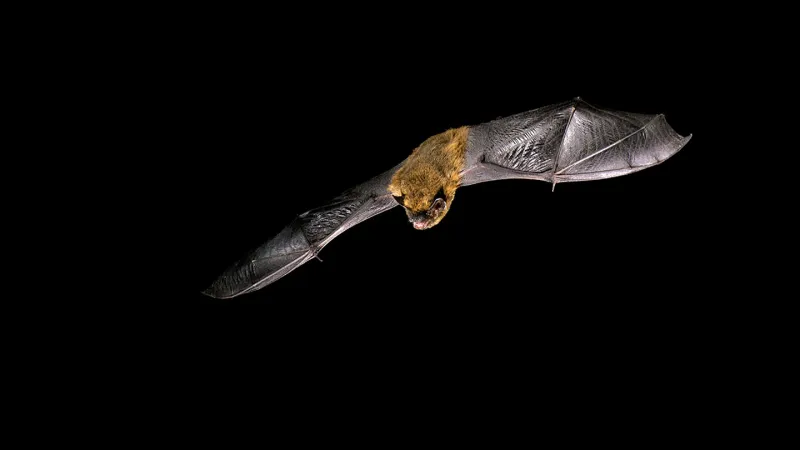
Photo by Photo by Lewis Campbell-Rowe on Unsplash on Unsplash
There's a shelf in a filing cabinet somewhere in Skelton that holds one of the most quietly remarkable datasets in Teesside natural history. It isn't fancy. It's notebooks, mostly — handwritten transect logs, species tallies, the odd pressed leaf and at least one complaint about a stolen bicycle. But stitched together, they form a near-continuous record of bat activity in one Cleveland wood, stretching back through three generations of volunteer recorders.
And when you read those notebooks in order, something unexpected happens: the wood itself becomes a character. You watch the fields around it disappear under housing. You hear the A-road arrive. And you watch which bats stay, which leave, and which — remarkably — turn up for the first time.
What the notebooks actually say
The earliest entries, from the 1930s, describe a wood hemmed in by pasture and hedgerow, with recorders reporting regular sightings of what were almost certainly brown long-eared bats and a scatter of pipistrelles over the meadow edges. By the 1970s, the tone shifts. Housing estates creep up to the western boundary. The hedgerows go. Notes from that decade are noticeably sparser — fewer bats logged, shorter entries, one recorder simply writing "quiet year" in July 1976.
Then comes the interesting bit. From the 1990s onwards, with the wood now sitting snugly inside suburbia, the records diversify. Noctule appearances increase, likely drawn to the streetlamp-lit playing fields next door where their high-flying hunting style works perfectly. Soprano pipistrelles, barely distinguishable from common pipistrelles before detectors became affordable, appear in force along the pond. And in 2011, a volunteer recorded a Nathusius's pipistrelle — still one of the most northerly regular records on the eastern side of the North York Moors.
What long-term data can — and can't — tell you
It's tempting to read a century of notebooks as a clean before-and-after story. Reality is messier. Early recorders didn't have bat detectors, so species identification relied on size, flight and habitat — which means some of those 1930s "long-eared bats" might have been anything. Survey effort has never been consistent either; some years have forty walks logged, others have three and a note about the weather.
This is the honest caveat behind every long-term dataset: it shows patterns, not proof. What it can show — and does, beautifully — is presence and absence over time. A species that vanishes for thirty years and returns is a real signal. A species that gets recorded more often might simply have more people looking.
Why local beats national
National monitoring schemes are vital, but they average away exactly the kind of change that matters on the ground. A national index can't tell you that the pond behind the old brickworks now hosts a maternity roost of soprano pipistrelles, or that the removal of two hedgerows coincided with a quiet decade along the eastern ride.
Local transects can. Because the same people walk the same route in the same conditions, year after year, small shifts become visible. That's why our own survey work in Cleveland leans so heavily on repeat volunteers — the value isn't in any single summer, it's in the tenth.
Have a go yourself
You don't need ninety years of history to start one. Pick a route you can walk in an hour. Do it at the same time of evening, once a month from April to September, and write everything down — even the "quiet years". Borrow or buy a basic detector, learn the common pipistrelle's distinctive slurred smech first, and add your records to your local biological records centre.
The Skelton notebooks survived because someone, decades ago, thought their evening walks were worth writing down. They were right. Yours might be too — and in ninety years, someone might be very glad you did.