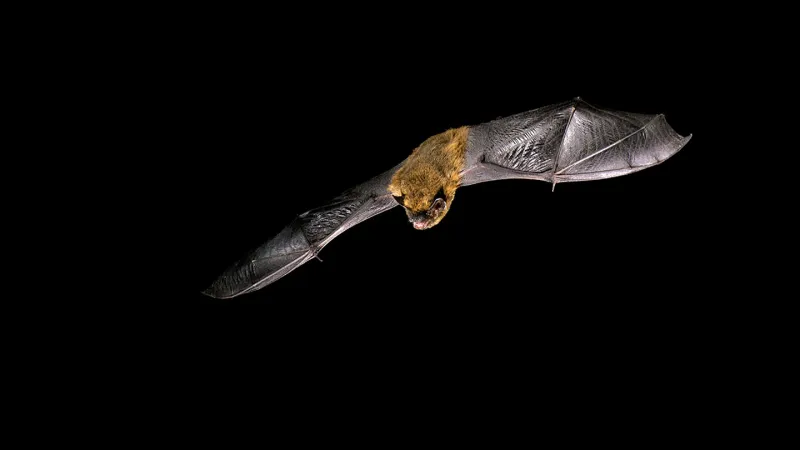
Concrete Corridors and Confused Pipistrelles: Are Teesside's Wildlife Crossings Actually Working?

Photo: Bōsai Kameda, Public domain, via Wikimedia Commons
Stand near any major road scheme on Teesside long enough and you'll hear the same word repeated by everyone involved: mitigation. Underpasses. Hopper tunnels. Culverts 'enhanced for bat passage'. It sounds reassuring — the idea that we can slice a landscape in half with tarmac and then stitch it back together with a bit of carefully placed concrete.
But here at Cleveland Bats, we've started asking a slightly awkward question: does it actually work for bats?
The Problem with a Six-Lane Wall
A dual carriageway isn't just a strip of tarmac. For a bat, it's a combination of hazards: an open, lit, noisy gap in the landscape, flanked by cuttings and fencing that funnel — or block — movement. Bats are creatures of habit when it comes to commuting. A soprano pipistrelle will follow the same hedgerow line night after night, from roost to feeding pond and back. Cut a road across that route and you've broken a journey she's made a thousand times.
The theory behind mitigation is simple enough: keep the corridor connected. Provide an underpass where the hedge used to cross. Keep it dark. Keep it quiet. Let the bats carry on as if nothing happened.
The reality, as anyone who has watched the tracking data knows, is messier.
What the Bats Actually Do
Ecologists who've radio-tracked bats around the A19 corridor will tell you the same thing: the animals don't always read the mitigation plan. Some pipistrelles take to the underpasses beautifully within a few nights. Others refuse point-blank, preferring to cross the carriageway itself at height, right over the top of the traffic. A few simply abandon that commuting route entirely and rewire their journeys around the disturbance — which might sound like a win, until you realise the new route passes through a less suitable feeding area.
Part of the problem is that we design for a generic 'bat' when there's no such thing. A brown long-eared bat, which hugs vegetation and hates open ground, will treat an underpass very differently from a noctule, which happily crosses open country at altitude. A tunnel that works for one species can be a dead end for another.
There's also the small matter of lighting. An underpass that's meant to be dark but ends up with a stray LED spill from the adjacent footpath can become, from a bat's perspective, a brightly lit no-go zone. We've covered before on this site how our switch to LED street lighting has changed bat behaviour — and the same sensitivity applies to crossing structures. The best-designed underpass in the world is worthless if it glows.
Engineering for Bats — or for Paperwork?
Here's the uncomfortable truth that comes up in conversation after conversation with local ecological consultants: the measure of success for a mitigation scheme is often whether it got signed off, not whether the bats use it.
Post-construction monitoring — actually going back, with detectors and thermal cameras, to check whether bats are using the crossing as intended — is patchy at best. Without it, we're building crossings on faith. And faith, as any volunteer who has spent a damp August evening in a layby with a heterodyne detector will tell you, is not a substitute for data.
There are good examples out there. Culverts retained under new road sections, with hedgerows replanted to funnel bats down and through, have shown real success elsewhere in the country when they're designed with the flight path in mind — low, dark, continuous cover leading right up to the entrance. The failures tend to share a pattern: the underpass is built, but the habitat linking it to the wider landscape is an afterthought.
What Good Looks Like
So what would we like to see on Teesside's next big scheme?
Monitor before, not just after. Survey the commuting routes before the plans are drawn, not during the ecology chapter of the planning application.
Keep it genuinely dark. Lighting plans should be designed around the crossing, not the other way round. Baffle the spill. Point the lamps down.
Connect the funnel. An underpass without hedgerow, treeline or scrub leading to it is a door to nowhere. Plant the approach routes and maintain them.
Publish the monitoring. If we spent public money on bat mitigation, we should know — and be able to show — whether it worked. That data would improve every future scheme in the region.
Go and Look for Yourself
You don't need a licence or a thermal camera to start noticing this stuff. Pick a bridge or underpass near you — the older culverts along the Leven, or the crossings around the A66 corridors — and stand outside it at dusk with a bat detector. If you hear that familiar hand-clap of pipistrelle calls echoing through the structure, you're watching mitigation that works. If the tunnel stays silent while bats commute overhead, you've just contributed to a very local piece of citizen science.
Send us your records — we collect them, and they genuinely inform the conversations we have with planners and ecologists. Because the more we know about what bats actually do at these crossings, the harder it becomes to build for the paperwork alone.