A Night at the Buffet: What DNA Analysis Reveals About Cleveland's Bat Diets
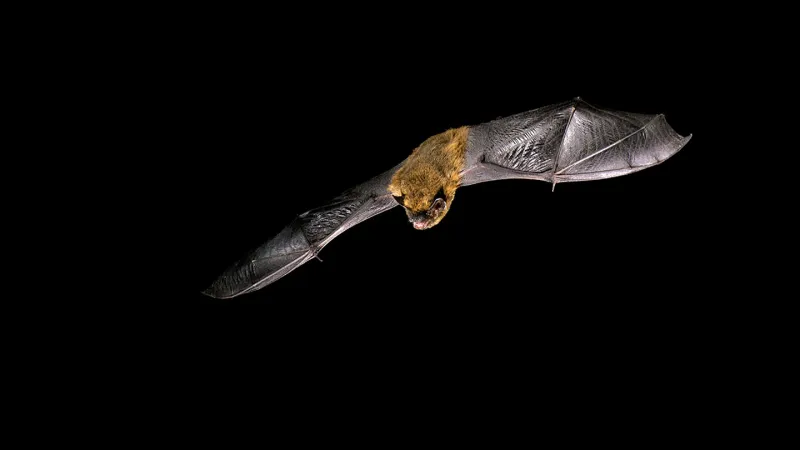
Photo: pipistrelle bat catching insect in flight at night, via www.woodlandtrust.org.uk
For most of the history of bat research, working out what a bat ate involved a fairly grim process: catching one, keeping it briefly, and examining the fragments of insect in its droppings under a microscope. You could identify the hard bits — beetle legs, moth wings — but anything soft-bodied vanished without trace. The midges, the flies, the true abundance of the night, simply didn't show up.
DNA analysis has changed all of that. And the results, for anyone who loves Teesside's wildlife, are fascinating.
How You Read a Bat's Shopping List
The science is beautifully simple in principle. Bats eat insects; insects have DNA; and that DNA survives in the droppings. Researchers collect fresh droppings from a roost or a feeding perch, extract the genetic material, and compare it against reference databases of known species. What comes back is a species list — sometimes dozens of prey species from a single dropping — read straight from the bat's own dinner plate.
No handling, no disturbance, and a level of detail that old-fashioned analysis couldn't touch. It's the difference between knowing a bat eats "flies" and knowing it ate three species of non-biting midge, a lacewing, a small moth and a spider that particular night.
The Teesside Menu
So what are our bats eating? The short answer: whatever the night provides, and the night provides a lot.
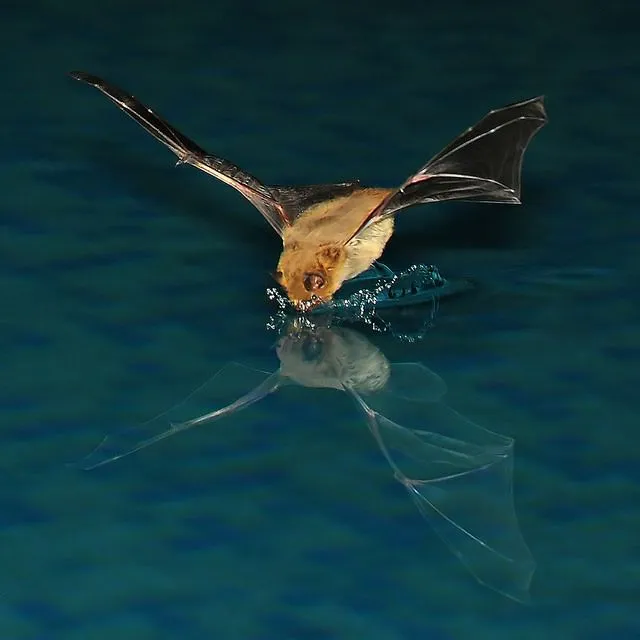
Over the Tees estuary and the wetlands along its margins, the dominant prey are chironomids — non-biting midges, the tiny flies that swarm in clouds over water at dusk. They're not glamorous, but they are staggeringly abundant, and they're the engine that drives much of our bat activity. Pipistrelles working the estuary at night are essentially harvesting midge swarms, taking hundreds in a single foraging bout.
Move inland to garden hedgerows, parkland and woodland edge, and the menu broadens. Moths feature heavily — particularly the smaller species that fly at night in numbers. Aphids, those gardeners' enemies, turn up regularly, as do craneflies in late summer. There are surprises too: small spiders, occasionally aphid parasites, and the occasional import from a lit area, where streetlights draw in insects from a wide radius and bats learn to exploit the concentration.
Different species, different tables. Soprano pipistrelles, with their preference for water, lean heavily on aquatic flies. Common pipistrelles are the generalists, feeding across hedgerows, gardens and streetlights. Brown long-eared bats, with their quiet, gleaning hunting style, take moths and other prey straight off foliage — prey that fast-flying pipistrelles never touch.
What the Droppings Tell Us About Us
Here's where it gets bigger than bats. Every dropping is also a snapshot of the insect life in the surrounding landscape — a biological survey conducted by an animal that covers several kilometres a night and samples everything in its path.
Researchers elsewhere have used exactly this technique to track changes in insect abundance, and the picture it builds is a nuanced one. Where the landscape is diverse — wetlands, hedgerows, gardens, rough ground — the diet is diverse too, and bats thrive. Where it's simplified, the diet simplifies with it. A bat eating forty species is living in a healthy food web; a bat eating three is telling you something about the land it flies over.
For Teesside, with its mix of estuary, industry, farmland and suburb, that's genuinely encouraging news in places — our wetlands and gardens are clearly producing enormous quantities of insect food. But it's also a reminder that the food web is only as strong as its weakest link.
Feeding the Chain From Your Own Back Garden
You don't need a laboratory to be part of this. Every garden in Cleveland is a link in the chain, and small changes make a real difference:
- Plant for insects, not just for looks. Night-scented stock, evening primrose, honeysuckle and jasmine all attract night-flying moths — which means they attract the bats that eat them.
- Let some of the garden go wild. Long grass, a log pile, a patch of nettles: untidy corners are insect factories.
- Rethink the lighting. Floodlights and bright security lights disorient moths and push insects (and bats) elsewhere. Motion sensors and warm-spectrum bulbs are a decent compromise.
- A pond, even a small one. A half-barrel water feature with a few marginal plants will breed midges within weeks. Yes, midges. Your bats will thank you.
- Skip the pesticides. Every aphid you spray is a meal that never makes it up the food chain.
If you fancy getting more involved, we run bat walks through the summer where you can watch feeding bats over some of the same habitats described above — and once you've seen a pipistrelle turn on a sixpence to snatch a midge out of the air, you'll never look at your garden pond the same way again.