No, They Won't Fly Into Your Hair: Talking Down Bat Myths at the School Gate
Photo: NPS Photo, Public domain, via Wikimedia Commons
Ask any Cleveland Bats volunteer about their favourite part of running a stall at a village fete or a school visit, and you'll get a lovely answer about a child's face lighting up at their first echolocation recording. Ask about the hardest part, and you'll get a sigh and a story about the man who insisted bats drink blood.
We hear the same handful of myths again and again. They're stubborn, they're often centuries old, and — this is the important bit — they have real consequences for how bats are treated. So here are the six we encounter most, along with the talking points our volunteers actually use.
Myth 1: Bats Get Tangled in Your Hair
The classic. It usually comes from a grandparent, delivered with absolute conviction.
The truth: bats are among the most agile fliers on the planet. A pipistrelle can detect and avoid a strand of wire finer than a human hair thanks to echolocation. They have zero interest in your head — what people experience is a bat hunting insects, and insects are often attracted to us. The bat was chasing the midge above your head, not your hairstyle.
Why it matters: fear of bats flying at people leads to nests and roosts being excluded or destroyed out of pure dread, especially in roof spaces.
Myth 2: Bats Are Basically Vampires
Thanks, Hollywood.
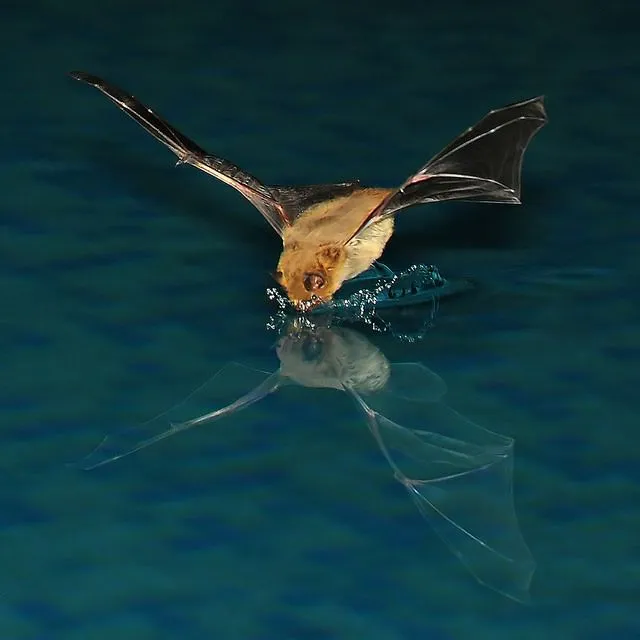
Of the more than 1,400 bat species worldwide, exactly three drink blood — and none of them live in Britain. Our bats eat insects. Every single one. A common pipistrelle can hoover up around 3,000 midges and mosquitoes in a single night, which makes it a better natural pest controller than any citronella candle you've ever bought.
Why it matters: the vampire association makes bats seem sinister and threatening, which colours every other conversation about them.
Myth 3: They're All Riddled with Disease
This one has grown louder in recent years, and it's the myth our volunteers find most draining to counter.
The truth: bats can carry diseases, as all wild mammals can — foxes, badgers, deer and squirrels included. But bat rabies (European bat lyssavirus) is extremely rare in UK bats, and there have been only a handful of recorded cases in decades of testing. The advice is simple and sensible: never handle a bat with bare hands. That's it. You're at more risk from the family cat than from a bat roosting in your neighbour's soffit box.
Why it matters: exaggerated disease fears are the most common reason people try to block up a roost. We'd much rather they called us for advice.
Myth 4: Bats in Your Loft Mean Your House Is Ruined
People imagine a loft transformed into something from a horror film. In reality, a roost of common pipistrelles might involve a couple of dozen small animals tucked behind a ridge tile or under a lead flashing. They don't build nests, they don't bring in nesting material, and the droppings — dry, crumbly and made of insect remains — are minimal in small roosts.
Why it matters: householders who panic can carry out illegal work. All UK bats and their roosts are protected by law, whether or not bats are in residence at the time. If you've got bats and concerns, talk to us or Natural England first. There's almost always a solution that works for both parties.
Myth 5: Seeing a Bat in Daylight Means It's Ill
Not necessarily. A bat found grounded or on an outside wall in daylight may well need help — but a bat seen flying at dusk in summer, or even briefly in late afternoon on a warm day, is often just getting an early start. Juvenile bats in late summer are famously clumsy. If you find a bat on the ground, contained and unmoving, that's when to call the Bat Helpline or us.
Myth 6: One Bat Is Just One Bat — Why Bother?
This is the quiet myth, the one people don't say out loud. The idea that a single roost, a single garden pond, a single old tree doesn't matter.
It does. Bats are long-lived — often fifteen years or more — and slow to breed, usually one pup a year. Populations can't bounce back quickly from losses, which is exactly why they've declined so sharply over the past century. Every roost that survives is part of a network.
Your Pocket Guide to Championing Bats
You don't need a biology degree to be a good ambassador. Our volunteers' rules of thumb:
- Lead with what bats do for us: thousands of insects a night, free of charge.
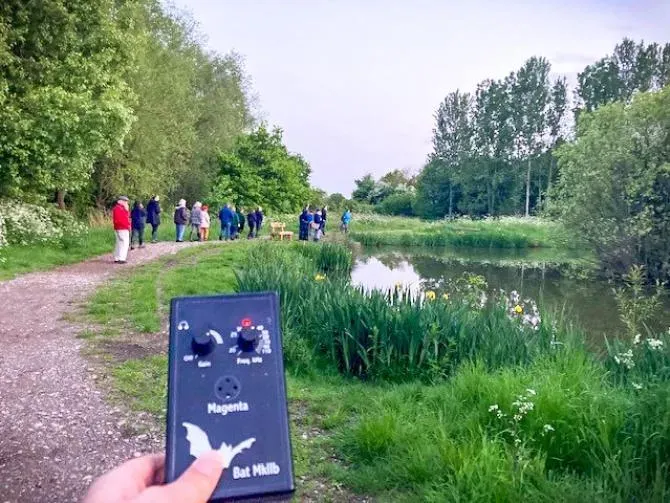
- Swap fear for fascination — a bat detector recording is worth a hundred lectures.
- Keep the health advice simple and calm: don't handle, do call for help.
- Never mock the myth-teller. Most people learned these stories from people they love.
If you'd like to practise your myth-busting in person, we're always looking for helpers at summer events across Teesside and Cleveland. No experience required — just enthusiasm, and ideally a tolerance for being told about vampires.