Leven's Sleeping Giant: Inside the Watermill Where Whiskered Bats Beat the Wreckers
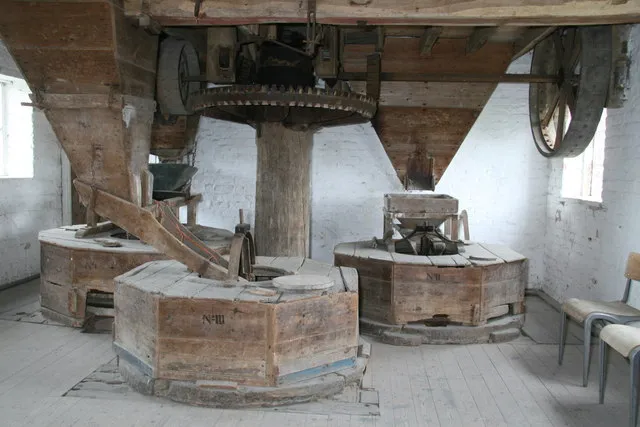
Photo: Chris Allen , CC BY-SA 2.0, via Wikimedia Commons
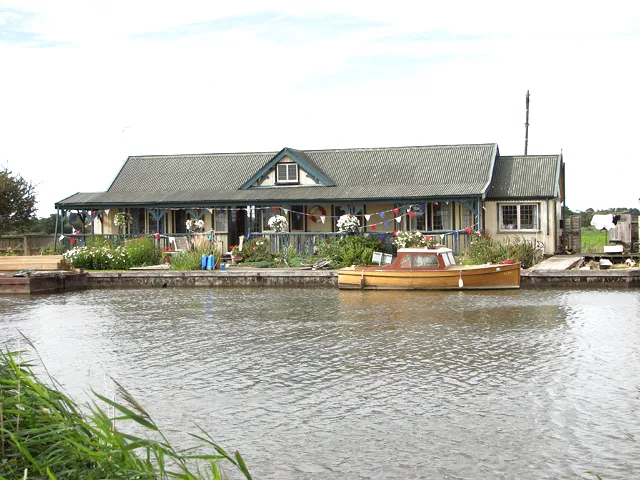
There's a moment on the footpath between Hutton Rudby and the Leven, just as the river bends and the trees close in, when you catch a glimpse of it: a hump of slate roof, sagging like an old mattress, with sycamores growing out of the guttering. Most walkers pass it without a second look. We've been looking at it for two years — mostly at dusk, mostly with a detector in hand — and we're increasingly convinced that the derelict mill on the Leven is one of the most important buildings for bats in this corner of North Yorkshire.
It's also a building that people want to save. And therein lies a problem worth talking about.
What the Detector Told Us
The first survey was meant to be a box-ticking exercise. A volunteer had reported "something squeaky" near the mill race, and we expected the usual answer: a scatter of common pipistrelles, doing what pipistrelles do.
Instead, within twenty minutes of sunset, we had steady passes of Myotis mystacinus — the whiskered bat — plus the tell-tale flutter-and-listen rhythm of a brown long-eared bat working the edge of the building. Both species are far less commonly recorded around Teesside than the pipistrelles we all know and love. Neither turns up reliably in a bat box. Both need exactly the kind of real estate that a rotting watermill provides in abundance.
Why? Because a ruined mill is, from a bat's perspective, a five-star hotel with no manager. The decayed timber is riddled with crevices — behind the cladding, under lifted slates, in the gaps where beams have pulled away from the wall plate. The thick stone walls hold a stable, cool internal temperature that suits brown long-eared bats, which are famously fussy about heat and like the option of slipping into deep, dark voids. The mill race and the adjacent wet woodland provide a feeding corridor that's essentially an all-night buffet of midges and caddisflies.
In short: the building's neglect is the bats' good fortune.
The Restoration Dilemma
Here's where it gets uncomfortable. The mill is on the local buildings-at-risk register, and there's genuine, well-meaning enthusiasm for bringing it back — a sympathetic conversion, a new roof, the leaky windows reglazed, the whole storybook rescue. We understand the impulse. These buildings are part of the Cleveland landscape's story, and we're not the sort of people who think old mills should be left to fall down.
But anyone who has spent time around bat work knows how this can go wrong. A re-roof strips out the slate gaps. New timber closes the crevices. Loft voids get insulated, sealed and lit. Done carelessly, a restoration can evict a colony overnight — legally, if the right surveys and mitigation are in place, but permanently all the same. The bats don't get a say. They just find the door sealed and, if they're lucky, find somewhere else. If they're unlucky, they don't.
The irony is sharp: our urge to preserve the heritage of a building could erase the wild heritage that moved in when we weren't looking.
There Is a Middle Way
We don't think this is a case of bats versus buildings. It's a case of bats versus bad planning. Across the UK, there are now well-established ways to keep both: bat access tiles and ridge gaps built into a new roof; retained timber features and dedicated roof voids left unlit and uninsulated; a matron box tucked into the gable end; lighting schemes designed around darkness rather than convenience. Brown long-eared bats, in particular, respond well to a properly designed loft — they'll happily share a restored building with humans if the dark, quiet void above their heads is left to them.
The crucial thing is that this has to happen before the scaffolding goes up, not after. Surveys need to be done across the active season, ecologists need to be involved from the first sketch, and the mitigation needs to be a design feature, not a bolt-on apology. We'd urge anyone involved with the mill — and with any of the other at-risk structures along the Leven and the Esk — to treat the bats as stakeholders from day one.
Why This One Matters
Whiskered bats and brown long-eared bats are under pressure everywhere: roost loss, lighting, insect decline. A site that supports both, in a riverside setting with connected feeding habitat, is not something Cleveland can afford to be casual about. The mill has spent decades quietly doing conservation work that no charity has been funded to do.
So here's our ask. If you live locally and you care about this building — or about what lives in it — keep an eye on any planning notices, and if a scheme appears, read it. Look for the bat surveys. Look for the mitigation. Ask the awkward, polite questions. And if you'd like to help us keep monitoring the site through the season, come along on one of our dusk walks or drop us a line through the website.
The mill has looked after its bats for a very long time. The least we can do is make sure that, when the builders finally arrive, the bats have somewhere left to live — ideally in the building itself, wings folded behind a brand-new bat brick, entirely unaware that anyone ever planned to fix the roof.