Rust Never Sleeps, and Neither Do Hibernating Bats: Why Cleveland's Ruins Are Worth Saving
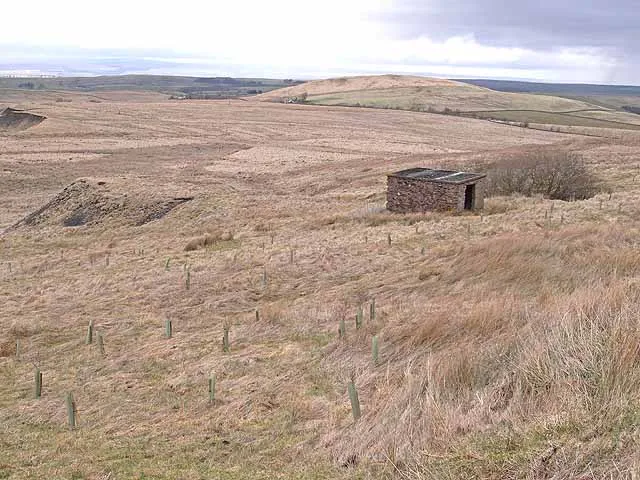
Photo: Oliver Dixon, CC BY-SA 2.0, via Wikimedia Commons
There's a particular kind of silence you get in a disused ironstone mine. Not the silence of open countryside — a proper, mineral silence, muffled by eighty feet of rock. Stand still long enough with a torch and a bat detector, and that silence starts to breathe.
Around Cleveland, it breathes in more places than you might think. Our post-industrial landscape — the spoil heaps, the adits, the lime kilns, the culverts — has quietly become one of the most important networks of hibernation habitat in the North East. And most people walk past it without a second glance.
Built by Industry, Inhabited by Accident
None of this was intentional. The alum workings along the coast at Boulby and the old shale sites near Loftus weren't designed with bats in mind. The ironstone mines that once fed Teesside's blast furnaces — the drifts around Skinningrove, the adits in the hills above Eston — were dug for ore, not hibernacula. But the conditions bats need are exactly what abandoned industrial structures provide: stable temperatures, high humidity, darkness, and crucially, freedom from disturbance.
A hibernating bat needs to maintain a very careful energy budget. Waking from torpor costs a bat weeks' worth of fat reserves, which is why they seek out places where nothing will ever bother them. A deep mine with a single entrance, no public access and a steady 8 degrees Celsius year-round? That's five-star accommodation, as far as a Natterer's or a whiskered bat is concerned.
We've recorded brown long-eared bats tucked into old beam sockets in coastal kilns. Daubenton's bats roosting in Victorian culverts that once carried water to works long demolished. And in the deeper mine systems, clusters of bats hanging in the same spots generation after generation — because bats are site-faithful. They don't just find a good hibernation site. They remember it, and they pass that knowledge on.
The Clock Is Ticking
Here's the uncomfortable part: these sites are disappearing, and they're not being replaced.
Industrial ruins decay. That's what ruins do. But decay, for a bat roost, is fatal in more ways than one. A collapsing mine entrance can bury a hibernation chamber. Equally dangerous is the fix — the safety works, the capping, the infilling ordered because a site has become a liability. A grille installed to keep people out of a mine can, if badly specified, also keep bats out. We've seen culverts demolished for flood schemes with no survey done, because nobody thought to ask what was living in them.
And then there's redevelopment. Cleveland's industrial heritage is increasingly attractive — coastal sites with views, brownfield land ripe for housing. Every planning application on a former works site is a potential moment where a roost is either protected or lost. Sometimes it comes down to whether anyone recorded the bats in the first place.
Heritage and Conservation Are the Same Fight
This is where we'll plant our flag: if you care about industrial heritage in this region, you should care about bats, and vice versa. The arguments are the same. Both depend on protecting structures that have no obvious economic value but immense cultural and ecological worth. Both suffer from the same attitude — that a crumbling kiln is just an eyesore, that a capped mine is just a hole in the ground.
The conservation bodies fighting to stabilise a lime kiln on the coast and the bat workers monitoring it in January are natural allies. A preserved structure with a secure, bat-compatible entrance serves both causes perfectly. Heritage funding can protect habitat; ecological surveys can make the case for saving a ruin that heritage bodies alone couldn't justify.
We'd love to see more of this joined-up thinking locally — joint surveys, shared site registers, ecologists and industrial archaeologists talking to each other before the bulldozers arrive rather than after.
What You Can Do
If you know an old structure near you — a kiln, a tunnel, a bridge void, a mine adit — and you've seen bats around it, tell us. Records matter. The databases that protect these sites are only as good as the sightings fed into them.
And if you fancy learning to survey properly, we run training through the winter months. There's nothing quite like your first glimpse of a bat in torpor, eyelids barely parted, hanging from a Victorian brick that somebody laid a hundred and fifty years before anyone thought about conservation.
The industries that built this region are gone. The bats moved into the gaps they left behind. The least we can do is keep the doors open.