Mud, Bricks and a Legal Loophole: What Really Happens When a Housing Estate Meets a Bat Roost

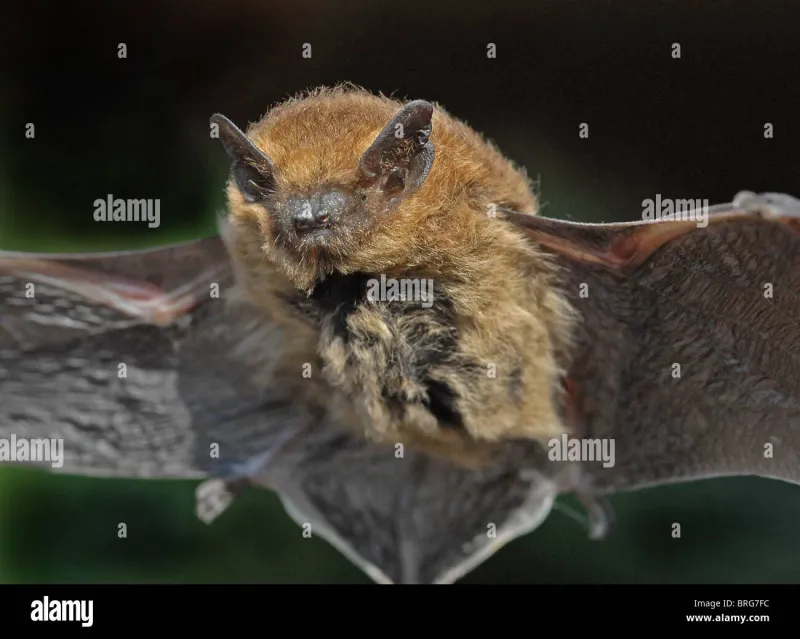
Photo: JThomas , CC BY-SA 2.0, via Wikimedia Commons
The pipistrelle is a creature of contradictions. At four grams — lighter than a two-pence piece — it is Britain's commonest bat, adaptable enough to roost behind soffit boards on a 1990s estate in Ingleby Barwick. Yet it is also a European protected species, and disturbing its roost carries the threat of an unlimited fine.
That tension sits at the heart of one of the trickiest questions facing Cleveland's countryside right now: what happens to bats when thousands of new homes are built on the fields they hunt over?
The Survey Machine
Every major planning application with potential bat interest triggers an ecological assessment. In theory, it works like this: a licensed consultant surveys buildings, trees and hedgerows for roosts, watches for flight activity at dusk with detectors, and files a report that the local planning authority's ecologist scrutinises.
In practice, timing is everything. Bats are seasonal animals — maternity colonies in summer, hibernation in winter — and surveys can only legitimately be done between roughly April and September, with the best evidence in June to August. An application submitted in November often means survey work squeezed into the following spring, or carried out on a single dusk visit that can miss a quiet roost entirely.
"A one-visit survey is a snapshot," as one experienced volunteer put it to us. "Bats don't read the timetable. A low recording on one evening in May tells you very little about what that barn holds in July."
Where the System Strains
Nobody we spoke to — planners included — claimed the system is perfect. Three weaknesses come up again and again.
Surveys are commissioned by the applicant. Consultants are generally competent professionals, but the ecological consultancy is paid by the developer, and there's an inherent pressure toward findings that don't derail a scheme.
Mitigation is assumed to work. The standard answer to a lost roost is a replacement: a bat loft, a brick with an integrated cavity, new planting. Sometimes these genuinely succeed. But there's little long-term monitoring, and a bat box bolted to a north-facing wall beside a busy road is compliance, not conservation.
Foraging habitat isn't a roost. A field of rough grassland over a stream may feed a colony all summer without technically containing a roost. Legally, that's much harder to protect — yet lose it, and the roost next door may empty anyway. On the edges of Stockton and Hartlepool, we've watched hedgerows that certainly held foraging bats disappear beneath topsoil ahead of applications, perfectly legally, before surveyors could ever record them.
What Volunteers Can — and Can't — Do
This is the part that surprises people. When a Cleveland Bats member spots roosting bats in a building slated for demolition, our power is almost entirely persuasive rather than legal.
We can record evidence and pass it to the planning authority. We can comment on applications as statutory consultees' neighbours in the public eye. We can check mitigation plans and flag shoddy ones. What we cannot do is stop works, enter land without permission, or handle a roost issue ourselves — that's a job for Natural England and licensed ecologists.
What we can do, and do often, is the unglamorous follow-up: monitoring mitigation years after the ribbon-cutting, when nobody's contract obliges anyone to care. Some of our best records come from new estates, where installed bat lofts quietly succeeded — proof the system can work when someone keeps an eye on it.
A Balanced Verdict, Urgently Delivered
Let's be fair to the other side. Teesside needs homes; the pipistrelle is genuinely adaptable and has colonised new suburbs readily. Developers we hear from point out that good ecology costs a fraction of the house price and that modern mitigation is far better than it was twenty years ago.
But 'adaptable' is not 'indestructible', and the species profile matters: the brown long-eared bat, slower to colonise and deeply loyal to traditional roosts in old barns and mature trees, is far less forgiving of the bulldozer. A system calibrated for the pipistrelle can quietly fail it.
The fix isn't to halt building. It's earlier surveys, honest monitoring of mitigation, and real weight given to foraging corridors — hedgerows, watercourses, rough grass — in the layout of new estates. Bats and new housing can coexist on Teesside. But only if the field surveys happen before the field surveys are flattened.
If you spot bats in a building under threat, don't intervene directly — record what you see, note the location, and contact us or the Bat Conservation Trust helpline. Your observation might be the one piece of evidence that changes a plan.