Sleeping in the Cutting: Inside Cleveland's Disused Railways, Where Natterer's Bats Ride Out the Winter

Photo by Photo by Shane Rounce on Unsplash on Unsplash
There's a particular kind of quiet you get inside a disused railway tunnel. Not silence, exactly — there's usually a drip somewhere, and the distant hum of the modern world — but a stillness that feels older than the brickwork around you. And if you know where to point a torch, and how to do it without disturbing anyone, that stillness is occasionally interrupted by something wonderful: a small, furry face peering out of a crevice, fast asleep, waiting for spring.
Welcome to Cleveland's forgotten railways — some of the most important hibernation sites in the region.
The Iron Road Through the Hills
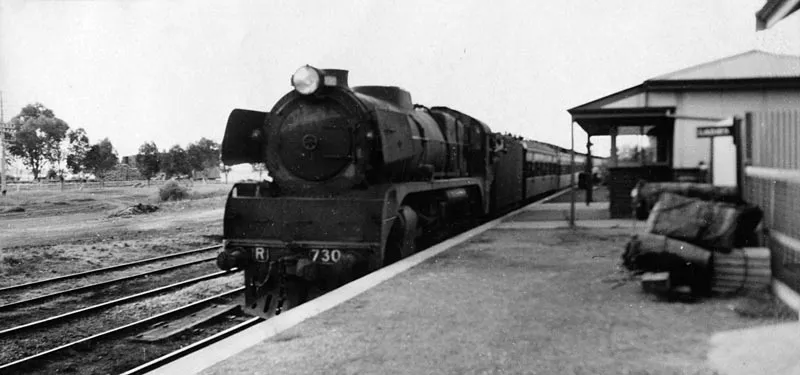
The Cleveland Hills have always been an obstacle for anyone in a hurry. When the Victorian railway companies pushed lines across North Yorkshire and into Teesside, they didn't go around the hills — they went through them. Tunnels were cut, deep sandstone and limestone cuttings were excavated, and brick arches were thrown up over streams and trackbeds. Some of these structures served the iron and freight lines for a century. Others were abandoned even earlier, when rival routes or falling traffic closed them within a few decades of opening.
What the engineers couldn't have known is that they were building, quite by accident, near-perfect bat accommodation. A good hibernation site needs three things: a stable, cool temperature; high humidity so the bats don't dehydrate; and plenty of cracks and crevices to tuck into. A Victorian brick tunnel delivers all three, year after year, with no heating bill and no landlord.
Meet the Tenant: Natterer's Bat
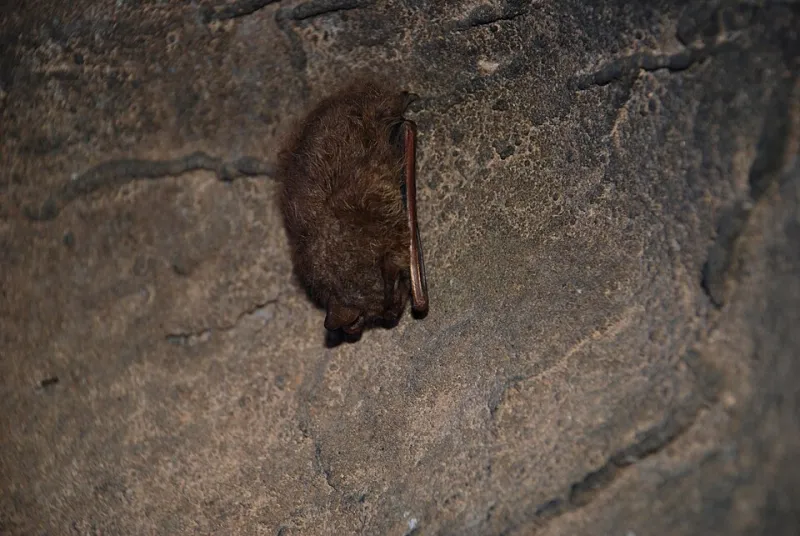
The star of these subterranean lodgings is the Natterer's bat (Myotis nattereri), one of our loveliest and most easily overlooked species. Roughly the size of a thumb, with pale underparts and a pinkish face, it's a woodland specialist — a gleaner that picks spiders and flies straight off leaves and bark rather than chasing them through the air. That makes it harder to spot on a summer dusk walk than a pipistrelle flitting over a garden pond.
Winter is when Natterer's really show themselves — provided you know where to look. They favour cool sites for hibernation, often arriving in tunnels and cellars from October onwards and staying well into spring. Unlike some bats that hang in the open, Natterer's love a tight squeeze: you'll often find them wedged into narrow cracks between bricks, with just a snout visible, or tucked behind old iron fixings left over from the railway era.
Alongside them, almost always, are brown long-eared bats — the tunnel's other regulars. True to form, they tend to hang in more open spots, fur fluffed up, enormous ears folded back like a pair of ram's horns.
What the Counts Are Telling Us
Every winter, Cleveland Bats volunteers join the wider network of licensed bat workers checking hibernation sites across the area. It's slow, careful work. You enter quietly, in small groups, and you count without touching. Every bat gets recorded — species, location within the tunnel, approximate condition — and the whole visit might take twenty minutes for what looks like very little happening.
But add up the visits and the years, and patterns emerge. We now know which tunnels hold the biggest gatherings, which crevices get reused every season, and roughly when the first arrivals turn up (earlier in cold autumns, later after a mild one). Natterer's numbers in some of our monitored sites have held steady or crept upward over recent years — genuinely encouraging news for a species that's far from common.
The brown long-eared counts tell a similar story of reliable, if modest, occupancy. These tunnels aren't crowded; they're consistent. And in bat conservation, consistency is worth its weight in gold.
Why the Old Lines Matter
It's tempting to see disused railways as waste ground — linear scars waiting to be developed or filled in. From a bat's perspective, they're the opposite: a connected network of roosting and commuting habitat threading through the landscape. A tunnel isn't just a winter bedroom. The cuttings and embankments either side are scrubby, undisturbed woodland edge, teeming with the insects Natterer's feed on. Bats can move along these green corridors for kilometres with barely a road to cross.
Which is why we watch planning applications along these routes with great interest. Fill in a tunnel, light up a cutting, or clear the scrub, and you don't just lose a structure — you break a chain that's been unbroken since the trains stopped running.
Want to See One? (From a Respectful Distance)
Hibernation sites are legally protected, and waking a hibernating bat costs it precious energy it can't easily replace — so please don't go exploring tunnels on your own. Unstable masonry, deep water and cold air make disused railways genuinely hazardous, quite apart from the wildlife.
The good news: you don't need to go underground to enjoy bats this year. Join us on one of our summer dusk walks along the old railway paths, detector in hand, and you'll hear the traffic of the night — and with a bit of luck and a good ear, you might just pick out the steady, unhurried calls of a Natterer's heading home to its Victorian hideaway.
The trains are long gone. The passengers, it turns out, never left.