Three Little Lives on a Heat Mat: A Season Inside East Cleveland's Volunteer Bat Rescue
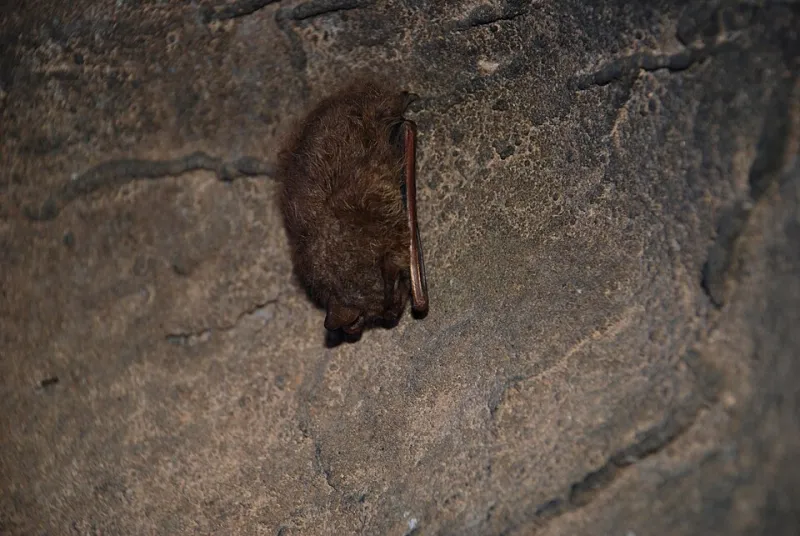
Photo: U. S. Fish and Wildlife Service - Northeast Region, Public domain, via Wikimedia Commons
It starts, as these things often do, with a phone call at an inconvenient hour.
"There's a bat on my doorstep. It's not moving. What do I do?"
That call, taken one chilly April evening by one of our trained carers, kicked off a season that would see three soprano pipistrelles pass through the hands of East Cleveland's first community-run bat rescue — and end, months later, with all three spiralling back into the dusk over Guisborough Woods. Here's how it happened, and what you need to know if you ever find yourself on the other end of that phone call.
Meet the Patients
The first arrival was a female soprano pipistrelle (Pipistrellus pygmaeus), found grounded on a pavement near Guisborough town centre after a cold snap. She was severely underweight — a healthy adult should tip the scales at around 5 to 6 grams, and she barely managed 3.5. The second, a young male, had been found tangled in protective netting over a garden fruit cage in Loftus. The third came to us in July: a pup, barely two weeks old and still hairless, discovered on the floor of a porch in Skelton after its roost was disturbed by roof repairs.
All three were soprano pips, which is no accident. These are among our commonest Cleveland bats — distinguishable from the common pipistrelle by their higher-frequency echolocation call, around 55 kHz rather than 45 kHz, and by a fondness for riparian habitat. If you've ever watched a tiny acrobat feeding over the Skelton Beck or the Esk at dusk, odds are decent it was one of these.
What the Law Says (and What It Doesn't)
Here's the bit that surprises most people: bats are fully protected under UK law, but you are absolutely allowed — indeed encouraged — to pick one up if it needs help. All bats in England and Wales are protected species under the Wildlife and Countryside Act 1981, and it's an offence to intentionally harm or disturb them. But there's a common-sense exemption in practice: handling a bat to rescue it, or to take it to a carer, is fine.
What you should do:
- Contain it. Use a small box lined with a soft cloth and add a shallow cap of water — bats dehydrate quickly.
- Keep it warm but not hot. A cool, quiet, dark room beats a radiator.
- Don't handle it bare-handed. Bats can carry rabies (European Bat Lyssavirus). It's extraordinarily rare in UK bats, but gloves or a towel are non-negotiable.
- Call for help. The Bat Conservation Trust runs a National Bat Helpline (0345 1300 228) that will connect you with a local trained carer — us included.
What you shouldn't do: feed it, keep it as a "project", release it yourself the next evening, or attempt any medical care. Bats rescued without proper rehydration and assessment frequently die of stress or dehydration even when they look fine. And critically, never release a bat that hasn't been assessed by a carer — a grounded bat that's simply put back outside often grounds again.
Heat Mats, Mealworms and 4am Feeds
So what does rescue actually look like? For our grounded female, it meant fluids first, then a slow rehydration programme on a heat mat, hand-fed mealworms every few hours. Bats in care eat a remarkable amount — a recovering pipistrelle can devour dozens of mealworms a night — and carers weigh them daily to track progress.
The netted male needed more intervention: a torn wing membrane, treated and cleaned, with strict rest before any flight testing. Wing membranes heal surprisingly well thanks to good blood supply, but scar tissue can affect flight, so carers watch carefully before clearing a bat for release.
The pup was the hardest. Hand-rearing a bat pup means feeds every few hours through the night with specialist milk formula — cow's milk is fatal to them. Our carer fostered her alongside another pup from a rescue in North Yorkshire, which dramatically improves survival rates, as pups in pairs settle and groom each other.
The Long Road to Release
Release isn't just opening a box. Bats in care need flight practice — often weeks in a large flight tent, building muscle and relearning echolocation in the dark. Our female was ready by late May; the male, with his healed wing, took until August. The pup, raised through the summer, was released in early September, timed to coincide with warm nights and good insect availability.
All three were released at dusk, close to where they were found, from a roost box on a known flight line near Guisborough Woods. We watched our female spiral up into a sky already busy with feeding pips, and she vanished into the swarm in seconds. That's the payoff. That's why carers do 4am feeds.
Could You Help?
We're always looking for volunteers — not just carers, who need BCT training and a rabies vaccination, but transport drivers, box-makers, and people willing to take a rescued bat the first few miles of its journey. If you'd like to get involved, or you've found a bat and need advice, get in touch through the website or call the National Bat Helpline. Guisborough's soprano pips are doing their bit. It'd be lovely if we could keep doing ours.