Cracks in the Concrete: The Secret Bat Colonies Living Under Teesside's Bridges
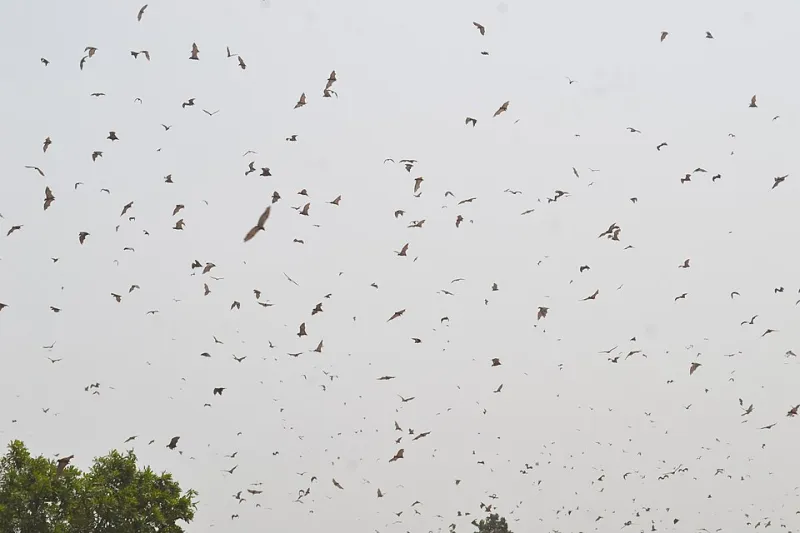
Photo: Kambai Akau, CC BY-SA 4.0, via Wikimedia Commons
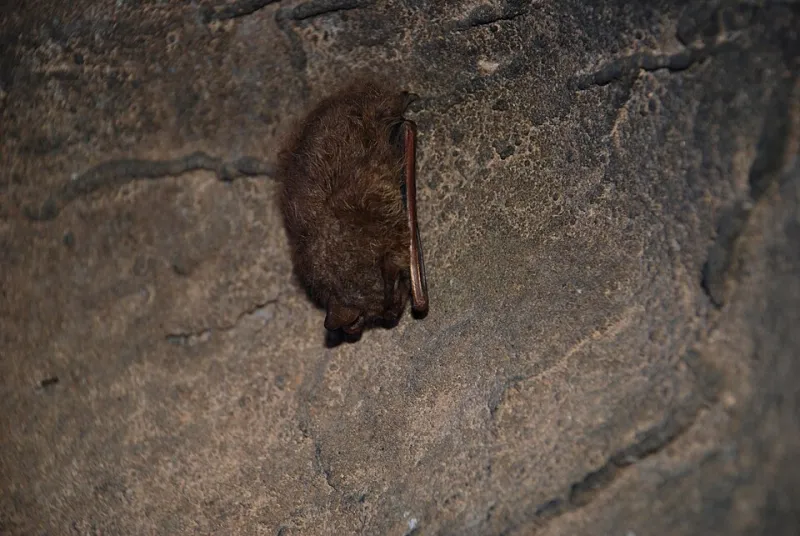
Stand on the bank of the Tees at dusk and you'll see them. Not just swifts screaming over the water, but small, flickering shapes stitching between the girders of the road bridges — pipistrelles, slipping in and out of crevices no wider than a fingernail. It's one of the least likely success stories in Cleveland conservation, and it's happening right above the rush hour.
Why Concrete Works
It sounds counterintuitive. We spend so much time telling people that bats need old barns, church towers and veteran trees that engineered structures can feel like a conservation write-off. But talk to the ecologists who survey Teesside's bridges and a different picture emerges.
Concrete, it turns out, is rather good at being a cave. Expansion joints — those dark gaps between bridge deck segments — hold a stable microclimate: sheltered from rain, buffered against temperature swings, and dark as a cellar. Drainage chambers and weep holes offer similar conditions, often with the added bonus of heat radiating gently from the structure itself. On a cool May night, a concrete soffit can be several degrees warmer than the surrounding air, which matters enormously to a pregnant female burning through her energy reserves.
Bridges also do what the best roosts do: they last. A tree falls, a barn gets re-roofed, but a road bridge will sit over the same river for a century, offering the kind of roost continuity that natural sites rarely provide.
Who Lives There
The common pipistrelle is the usual tenant, often in numbers. Soprano pipistrelles, which have a stronger affinity for water, favour bridges over rivers and estuary channels. And on some of the older masonry structures — the Victorian railway viaducts where lime mortar has weathered into gaps — we've had records of the more demanding brown long-eared bat, a species that usually wants a proper roof space and won't settle for a crack in a wall.
Monitoring these sites is slow, patient work. Ecologists count emergences at dusk, note whether the bats are adults or volant young, and record echolocation calls to confirm species. Because a bridge is a public structure, there's none of the access problems you get with a private barn — which makes these some of the best-studied roosts in the region.
What Happens When the Repair Crews Arrive
Here's the rub: everything that makes a bridge good habitat also makes bridge maintenance a legal minefield. Any structure with a roost is protected, and that applies just as much to a motorway underpass as it does to a medieval church.
Before any repair, repointing or waterproofing work, a survey has to establish what's using the structure and when. If a colony is present, work may need to be timed outside the maternity season, or carried out under a licence with mitigation attached — sometimes a purpose-built bat box cast into the new concrete, sometimes a temporary exclusion period while the young are weaned. Modern engineering has got surprisingly good at this: some newer bridges in the region have been designed with roosting voids built in from the start, a quiet victory for ecologists sitting in on design meetings.
The real risk isn't a dramatic demolition — it's the small stuff. A well-meaning repointing job that seals every joint, or waterproofing membrane that fills the crevices, can evict a colony without anyone realising. Which is why the monitoring matters: the people keeping records of these sites are often the only ones who'll notice when a bridge goes quiet.
Watching an Emergence (Without Causing a Problem)
You don't need to go inside a roost to enjoy one, and you absolutely shouldn't try. But watching from a respectful distance on a summer evening is one of the great free pleasures of Cleveland wildlife-watching.
A few pointers:
- Arrive 20 minutes before sunset and pick a spot 30 metres or more from the structure. Bats are more tolerant of distant observers than you'd think.
- Keep noise and light down. Torches, phone screens and loud conversation all delay emergence — and a delayed emergence means a bat burning energy it can't spare.
- Look, don't linger. Fifteen to twenty minutes of watching is plenty. If the bats seem reluctant to appear, move on and try another evening.
- A bat detector helps enormously. Even a cheap heterodyne unit will pick up pipistrelle calls around 45–55 kHz and turn a distant smudge into an identifiable species.
Where to try? Bridges over the Tees and its tributaries are the obvious starting points, particularly those with older masonry or sheltered undersides. River footbridges on the urban fringe often hold small pipistrelle roosts that emerge right over the water — easy viewing, easy identification, and a wonderful way to introduce children to the idea that wildlife doesn't just live in nature reserves.
The Bigger Picture
There's a broader lesson in all this. Bats have been exploiting human structures for as long as we've been building them — caves, wells, churches, now flyovers. The question isn't whether they'll use our infrastructure, but whether we'll build and maintain it in a way that leaves them room.
If you spot bats using a bridge near you, we'd love to hear about it. Records from members of the public feed straight into local monitoring — and they genuinely make a difference when a repair scheme comes up for planning. Send us the location, the date, and roughly how many bats you saw. It's a small act of citizen science that might just protect a colony for another fifty years.